

🔥 STOCKTAKE SALE NOW ON
🚚 SAVE UP TO 40% OFF SELECTED FITNESS EQUIPMENT
🎉 PREMIUM GYM EQUIPMENT ON SALE
⚡ CLEARANCE DEALS
🔥 STOCKTAKE SALE NOW ON
🚚 SAVE UP TO 40% OFF SELECTED FITNESS EQUIPMENT
🎉 PREMIUM GYM EQUIPMENT ON SALE
⚡ CLEARANCE DEALS
🔥 STOCKTAKE SALE NOW ON
🚚 SAVE UP TO 40% OFF SELECTED FITNESS EQUIPMENT
🎉 PREMIUM GYM EQUIPMENT ON SALE
⚡ CLEARANCE DEALS
🔥 STOCKTAKE SALE NOW ON
🚚 SAVE UP TO 40% OFF SELECTED FITNESS EQUIPMENT
🎉 PREMIUM GYM EQUIPMENT ON SALE
⚡ CLEARANCE DEALS
🔥 STOCKTAKE SALE NOW ON
🚚 SAVE UP TO 40% OFF SELECTED FITNESS EQUIPMENT
🎉 PREMIUM GYM EQUIPMENT ON SALE
⚡ CLEARANCE DEALS
🔥 STOCKTAKE SALE NOW ON
🚚 SAVE UP TO 40% OFF SELECTED FITNESS EQUIPMENT
🎉 PREMIUM GYM EQUIPMENT ON SALE
⚡ CLEARANCE DEALS


Planning Your Commercial Gym Layout: Equipment ROI
A commercial gym floor is a financial system, not just a training space. Every square metre of floor and every dollar of equipment spend either generates member usage and retention, or it sits underused while still costing in rent, maintenance and depreciation. Planning a commercial gym layout properly means thinking about equipment ROI from day one, not retrofitting that thinking after the doors open.
This guide walks through how to plan a commercial fit-out with equipment return on investment as the organising principle, covering zone planning, prioritisation, and a phased approach to purchasing that protects cash flow without compromising the member experience.
Why Layout Is a Financial Decision
Every piece of equipment on a commercial floor competes for the same finite resources: floor space, capital, and member attention. A machine that occupies four square metres and sees heavy use throughout the day delivers a fundamentally different return than a machine of the same footprint that sits idle most of the week.
The goal of ROI-driven layout planning is simple to state and harder to execute: maximise member usage and retention per square metre and per dollar spent, while still delivering the training variety that keeps a diverse membership base engaged.
This requires treating equipment selection as a portfolio decision rather than a series of individual purchases. Some equipment exists to drive usage and member satisfaction even if its individual utilisation rate is lower (a wider variety of functional training options, for instance), while other equipment is chosen specifically because it sees near-constant use and anchors the member's reason for visiting (a functional trainer or a well-specified rack zone, for example).

Calculating Equipment ROI
A practical ROI framework for gym equipment weighs four factors against each other.
Acquisition cost. The upfront capital outlay, including delivery and installation, not just the sticker price of the machine itself.
Expected lifespan. Commercial-grade equipment built to genuine commercial specification (heavier steel gauge, sealed bearing pulleys, robust warranty terms) costs more upfront but amortises that cost over a longer usable life, which usually produces a lower effective cost per year of service.
Member usage rate. How frequently is this piece of equipment actually used across a typical week? Equipment with high, consistent usage justifies a larger floor footprint and budget allocation. Equipment used rarely, however popular it looks in marketing photos, should occupy a correspondingly smaller share of your floor plan and budget.
Retention and acquisition impact. Some equipment exists less for raw usage volume and more because its presence is a deciding factor in whether a prospective member joins, or an existing member stays. A well-equipped functional training zone or a strong free weights area often falls into this category, where the equipment's value is partly about member perception and competitive positioning, not usage minutes alone.
Weighing these four factors against each other for each major equipment category gives you a far more defensible basis for capital allocation than simply replicating what a competitor's gym floor looks like.
Zone Planning Principles
A well-planned commercial floor is organised into clear zones that support natural member flow and minimise congestion at peak times.
Cardio zone. Typically positioned near entry points or windows, cardio equipment benefits from visibility (both for member motivation and for staff sightlines) and tends to have predictable, high-frequency usage patterns that justify a meaningful floor allocation in most general fitness facilities.
Strength zone. Rack and free weight areas need the most generous clearance allowances of any zone, since safe barbell loading and unloading requires space on multiple sides of each station. Under-allocating clearance here is one of the most common commercial layout mistakes, and one of the most expensive to fix after opening.
Functional training zone. This zone benefits from open floor space that can flex between different uses (battle ropes, sleds, plyo work, functional trainer stations) rather than being filled with fixed equipment that locks the space into a single use case.
Transition and traffic flow. The space between zones matters as much as the zones themselves. Members moving between cardio, strength and functional areas need clear, uncongested paths, particularly during peak hours. A floor plan that looks efficient on a blueprint can still create dangerous bottlenecks if traffic flow wasn't modelled against realistic peak occupancy.
High-ROI Equipment Categories to Prioritise
Based on typical usage patterns across general fitness and PT-style facilities, a few equipment categories consistently deliver strong ROI and are worth prioritising in an initial fit-out budget.
Commercial functional trainers see consistently high usage across a broad range of member types and fitness levels, and a single quality unit can replace what would otherwise require multiple separate cable stations, making the floor space and budget efficient relative to the exercise variety delivered.
Racks and free weight zones anchor a large proportion of serious lifters' training decisions when choosing a gym, making this zone disproportionately important to both retention and word-of-mouth acquisition relative to its floor footprint.
Quality cardio equipment sees high frequency usage and is often the first thing a prospective member tests on a walkthrough, making build quality and reliability here a direct driver of both first impressions and ongoing retention.
Lower priority for an initial fit-out, without being unimportant, includes highly specialised single-purpose machines that serve a narrower segment of your membership. These are strong additions in a phase two expansion once usage data from the core zones is available to guide the decision.
A Phased Purchasing Strategy
Very few commercial fit-outs need to buy everything on day one, and trying to do so often means under-investing in the equipment that matters most in favour of spreading budget too thinly across everything.
Phase one: the core. Cardio, strength (rack, barbells, plates, benches) and a functional trainer. This core covers the overwhelming majority of general fitness training needs and should receive the largest share of the opening budget and the best build quality your budget allows.
Phase two: depth and specialisation. Once the facility is operating and usage data is available, add equipment that responds to observed member behaviour: additional cardio variety if that zone is consistently busy, specialised strength machines if a particular training style is in high demand, or expanded functional training equipment if that zone is proving popular.
Phase three: differentiation. Equipment that sets the facility apart from nearby competitors, informed by what your specific membership base has shown they value through phases one and two.
This phased approach protects cash flow during the highest-risk early months of operation while still allowing the floor to grow into a fully differentiated offering as the business matures.
Common Layout Mistakes That Waste Floor Space
Treating every zone as equally important from day one. Spreading the opening budget evenly across all equipment categories typically means every zone is mediocre rather than any zone being genuinely strong.
Underestimating clearance requirements. A rack or functional trainer that technically fits the floor plan but doesn't allow safe loading and full range of motion creates both a safety issue and a usage ceiling that limits ROI regardless of the equipment's quality.
Ignoring sightlines for staff supervision. Equipment placement that creates blind spots increases both safety risk and the difficulty of delivering the kind of visible, engaged service that drives retention.
Buying on price alone for high-usage equipment. The equipment categories with the highest usage rates are exactly where build quality matters most, since they are the machines absorbing the most cumulative wear. Saving on acquisition cost here often produces a worse total cost of ownership once maintenance and earlier replacement are factored in.
A Practical Checklist for Gym Owners Starting a Fit-out
-
Confirm floor dimensions, ceiling height, and structural load capacity before finalising equipment selection
-
Map zones based on expected usage patterns, not just available space
-
Allocate clearance generously around strength and functional zones
-
Prioritise build quality on the equipment categories with the highest expected usage rate
-
Build a phased purchasing plan rather than attempting a complete fit-out on day one
-
Model traffic flow between zones against realistic peak occupancy, not average occupancy
Plan Your Fit-out With Local Expertise
Southern Cross Fitness takes a consultative approach to commercial fit-outs, from facility design and equipment selection through to delivery and installation.
Our team works directly with gym owners to plan layouts that balance member experience against equipment ROI, drawing on equipment we design, import and support ourselves.
Browse the full Commercial Strength range or speak with our commercial team to start planning your fit-out.
Products Featured in this Article
100kg ARROW Hammertone Standard 29mm Weight Plate Package

20% off

100kg ARROW Hammertone Standard 29mm Weight Plate Package
Sale price
$400
Regular price
$500
ARROW 10KG Rubber Hex Dumbbell Pair

25% off

ARROW 10KG Rubber Hex Dumbbell Pair
Sale price
$90
Regular price
$120
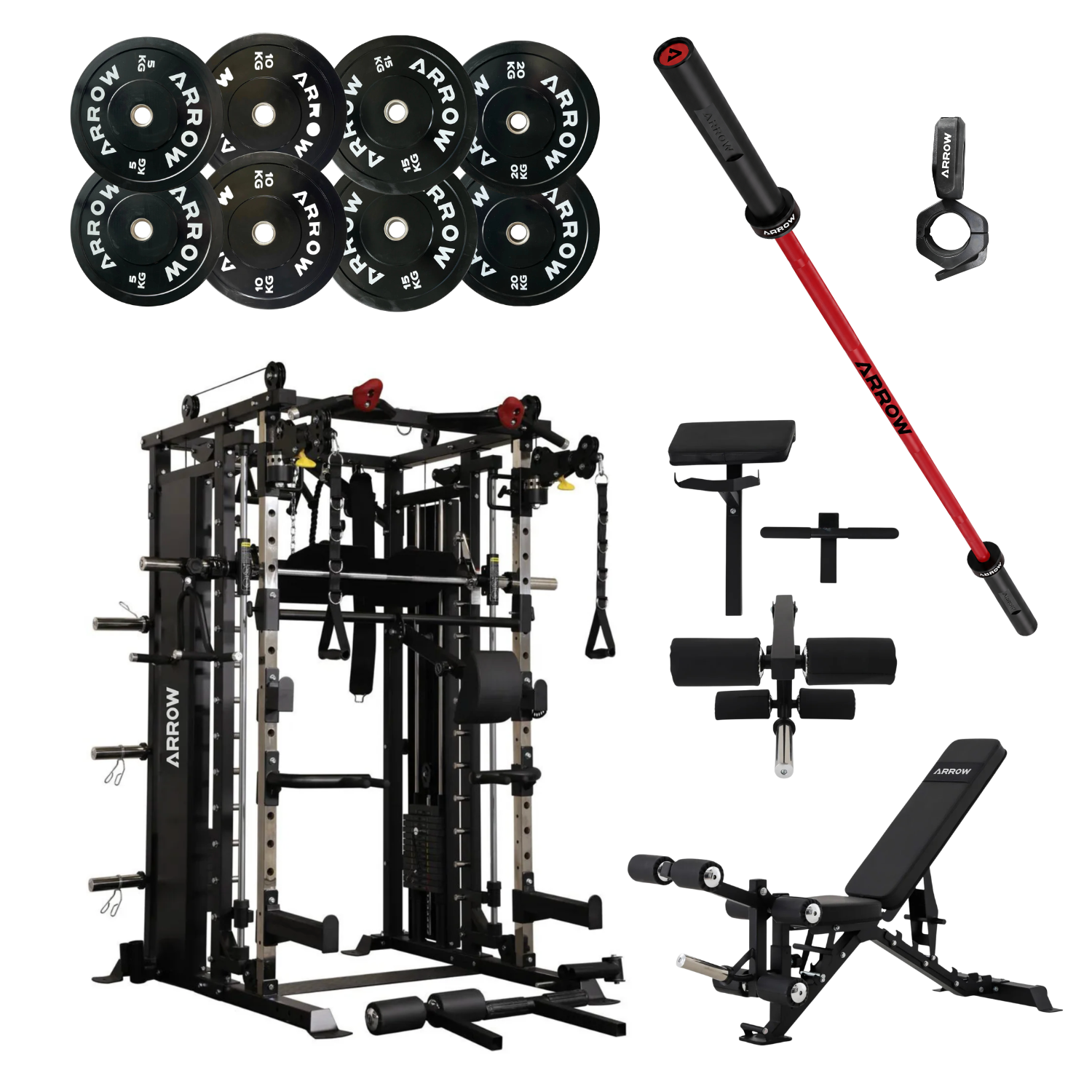
ARROW Elite Strength Package
31% off
Pre-order
ARROW Elite Strength Package
Sale price
$5,999
Regular price
$8,645
- Choosing a selection results in a full page refresh.
notification
!